Gut bacteria may hold key to schizophrenia published on Irish Medical Times
Researchers in the Alimentary Pharmabiotic Centre in UCC have put forward a radically novel view of the biology of schizophrenia and more specifically its genetic basis, and their work may have significant implications for the development of new treatment strategies for the disorder.
Schizophrenia usually begins in the late teens or early 20s, and tends to be a life-long condition in the majority of cases. The risk of developing the disorder is approximately one in 100 in the general population. However, if there is a history of schizophrenia in the family the risk rises significantly.
However, very slow progress has been made in determining the complex genetics of schizophrenia.
Prof Ted Dinan and colleagues at the Alimentary Pharmabiotic Centre have published a paper on the genetics of schizophrenia in the journal Molecular Psychiatry. They argue that genetic studies over the past few decades have been less than productive in determining the biology of the disorder and in helping develop new treatments.
They re-evaluate the studies to date and put forward a radical alternative perspective.
The research — funded by Science Foundation Ireland — points out that there are more than 100 times as many genes in the bacteria within our intestine as exist in our cells and many of these genes play a fundamental role in brain development and function. In their laboratory, the researchers have found that animals raised in a germ-free environment, who have not been exposed to bacteria, show similar social interaction to that observed in schizophrenia and recent studies indicate that antibiotics may help alleviate some symptoms.
Minocycline, which is used to treat acne in teenagers, has been found to impact on symptoms such as delusions and hallucinations as well as social withdrawal. To date, there has been little effort to explore intestinal bacterial genes in patients with the disorder.
Prof Dinan’s group is currently focusing on this approach with a view to developing new and more effective treatments. They draw a parallel with the gut disorder peptic ulcer disease, which like schizophrenia tends to run in families.
With the publication of Professor Geoff Raisman’s spectacular achievement in repairing the damaged spinal cord of a Polish knife attack victim in the journal Cell Transplantation, we are witnessing a paradigm shift of biblical proportions in the field of spinal cord repair – for the first time stem cell therapy has exceeded expectations. Humanity is on the verge of great advances in the understanding and repair of neurological disasters.
This week marks a significant milestone in our journey from the first bone marrow (stem cell) transplant to treat Leukaemia in 1956 (earning the Nobel Prize for Dr. Thomas and J.E. Murray in 1990) to Professor Raisman’s publication in 1969 on the ‘Plasticity of Nerve Cells’.
In just 10 years the possibility of neural regeneration has revolutionised our understanding of neural physiology and repair.
It all began when the canary (long used to warn coal miners of dangerous gasses in the mines) was found to grow 500,000 new neural cells in the process of learning a new song each spring time (it’s amazing what is done for love!!)
A few years later an inspired researcher did MRI brain studies on London Taxi drivers learning maps of London (known as ‘The Knowledge’). A repeat MRI nine months later showed that the hippocampus had grown in size by 14%.
Another study found that when rats learned to navigate a new maze, after only 5 trials they developed more than 20,000 new brain cells. The control group of rats that just ran around a ring for the same time showed no increase in brain cells.
So the brain can and does grow when stimulated. Professor Raisman’s research was the subject of an excellent cover story in the Sunday Times supplement circa 2007. I am personally pleased that I used his research findings and hypotheses in my presentations to the European Anti-ageing Conference on ‘The Potential of Stem Cell Therapy’ in Athens in 2007 and in Paris the following year.
In summary, the stem cell promise has been vindicated.
See below for comprehensive coverage of this exciting medical development from the ever-brilliant BBC.
Paralysed man walks again after cell transplant
By Fergus WalshMedical correspondent
A paralysed man has been able to walk again after a pioneering therapy that involved transplanting cells from his nasal cavity into his spinal cord.
Darek Fidyka, who was paralysed from the chest down in a knife attack in 2010, can now walk using a frame.
The treatment, a world first, was carried out by surgeons in Poland in collaboration with scientists in London.
BBC One’s Panorama programme had unique access to the project and spent a year charting the patient’s rehabilitation.
Darek Fidyka, 40, from Poland, was paralysed after being stabbed repeatedly in the back in the 2010 attack.
He said walking again – with the support of a frame – was “an incredible feeling”, adding: “When you can’t feel almost half your body, you are helpless, but when it starts coming back it’s like you were born again.”
Prof Geoff Raisman, chair of neural regeneration at University College London’s Institute of Neurology, led the UK research team.
He said what had been achieved was “more impressive than man walking on the moon”.
UK research team leader Prof Geoff Raisman: Paralysis treatment “has vast potential”
The treatment used olfactory ensheathing cells (OECs) – specialist cells that form part of the sense of smell.
OECs act as pathway cells that enable nerve fibres in the olfactory system to be continually renewed.
In the first of two operations, surgeons removed one of the patient’s olfactory bulbs and grew the cells in culture.
Two weeks later they transplanted the OECs into the spinal cord, which had been cut through in the knife attack apart from a thin strip of scar tissue on the right. They had just a drop of material to work with – about 500,000 cells.
About 100 micro-injections of OECs were made above and below the injury.
Four thin strips of nerve tissue were taken from the patient’s ankle and placed across an 8mm (0.3in) gap on the left side of the cord.
The scientists believe the OECs provided a pathway to enable fibres above and below the injury to reconnect, using the nerve grafts to bridge the gap in the cord.
How the injury was treated
1) One of the patient’s two olfactory bulbs was removed and the olfactory ensheathing cells (OECs) were grown in culture
2) 100 micro injections of OECs were made above and below the damaged area of the spinal cord
3) Four strips of nerve tissue were placed across an 8mm gap in the spinal cord. The scientists believe the OECs acted as a pathway to stimulate the spinal cord cells to regenerate, using the nerve grafts as a bridge to cross the severed cord
Before the treatment, Mr Fidyka had been paralysed for nearly two years and had shown no sign of recovery despite many months of intensive physiotherapy.
This programme of exercise – five hours per day, five days a week – has continued after the transplant at the Akson Neuro-Rehabilitation Center in Wroclaw.
Mr Fidyka first noticed that the treatment had been successful after about three months, when his left thigh began putting on muscle.
Six months after surgery, Mr Fidyka was able to take his first tentative steps along parallel bars, using leg braces and the support of a physiotherapist.
Two years after the treatment, he can now walk outside the rehabilitation centre using a frame.
He has also recovered some bladder and bowel sensation and sexual function.
Dr Pawel Tabakow, consultant neurosurgeon at Wroclaw University Hospital, who led the Polish research team, said: “It’s amazing to see how regeneration of the spinal cord, something that was thought impossible for many years, is becoming a reality.”
Mr Fidyka undergoes five hours of physiotherapy a day
Mr Fidyka still tires quickly when walking, but said: “I think it’s realistic that one day I will become independent.
“What I have learned is that you must never give up but keep fighting, because some door will open in life.”
The groundbreaking research was supported by the Nicholls Spinal Injury Foundation (NSIF) and the UK Stem Cell Foundation (UKSCF)
UKSCF was set up in 2007 to speed up progress of promising stem cell research – the charity has to date contributed £2.5m
NSIF was set up by chef David Nicholls after his son Daniel was paralysed from the arms down in a swimming accident in 2003.
To date the charity has given £1m to fund the research in London and a further £240,000 for the work in Poland.
The breakthrough
A key difference with Mr Fidyka was that the scientists were able use the patient’s olfactory bulb, which is the richest source of olfactory ensheathing cells.
This meant there was no danger of rejection, so no need for immunosuppressive drugs used in conventional transplants.
Most of the repair of Mr Fidyka’s spinal cord was done on the left side, where there was an 8mm gap.
He has since regained muscle mass and movement mostly on that side.
Scientists believe this is evidence that the recovery is due to regeneration, as signals from the brain controlling muscles in the left leg travel down the left side of the spinal cord.
MRI scans suggest that the gap in the cord has closed up following the treatment.
None of those involved in the research want to profit from it.
Prof Geoff Raisman said: “It would be my proudest boast if I could say that no patient had had to pay one penny for any of the information we have found.”
NSIF said if there were any patents arising, it would acquire them so as to make the technique freely available.
The sense of smell and spinal repair
The complex neural circuitry responsible for our sense of smell is the only part of the nervous system that regenerates throughout adult life.
It is this ability that scientists have tried to exploit in stimulating repair in the spinal cord.
Every time we breathe, molecules carrying different odours in the air come into contact with nerve cells in the nose.
These transmit messages to our olfactory bulbs – at the very top of the nasal cavity, sitting at the base of the brain.
The nerve cells are being continually damaged and must be replaced.
This process of regeneration is made possible by olfactory ensheathing cells (OECs), which provide a pathway for the fibres to grow back.
Mr Nicholls said: “When Dan had his accident I made him a promise that, one day, he would walk again. I set up the charity to raise funds purely for research into repairing the spinal cord. The results with Darek show we are making significant progress towards that goal.”
Prof Wagih El Masri said: “Although the clinical neurological recovery is to date modest, this intervention has resulted in findings of compelling scientific significance.”
The consultant spinal injuries surgeon, who has treated thousands of patients in the UK, added: “I have waited 40 years for something like this.”
All those involved in the research are keen not to raise false hopes in patients and stress that the success will need to be repeated to show definitively whether it can stimulate spinal cord regeneration.
The scientists hope to treat another 10 patients, in Poland and Britain over the coming years, although that will depend on the research receiving funding.
Dr Tabakow said: “Our team in Poland would be prepared to consider patients from anywhere in the world who are suitable for this therapy. They are likely to have had a knife wound injury where the spinal cord has been cleanly severed.
Sir Richard Sykes, chair of the UK Stem Cell Foundation, said: “The first patient is an inspirational and important step, which brings years of laboratory research towards the clinical testbed.”
“To fully develop future treatments that benefit the 3 million paralysed globally will need continued investment for wide scale clinical trials,”
The researchers
Prof Raisman
Prof Raisman has spent more than 40 years studying how to repair the spinal cord.
In animal studies he showed that OECs injected into the rat spinal cord could reverse paralysis.
In 2005, Prof Raisman was approached by a Polish neurosurgeon who had begun researching how to apply the technique in humans.
Dr Tabakow
Dr Tabakow carried out an initial trial involving three paralysed patients who each had a small amount of OECs injected in their damaged spinal cords.
While none showed any significant improvement, the main purpose of the study was achieved, showing that the treatment was safe.
Multiple recent developments have inspired us at Dunphy Medical to focus on healthy brains this month, here are a few of them.
Trinity College in association with the EU recently launched Hello Brain, a website and free app that promotes mental agility, brain health and understanding of this fascinating organ, follow a link to their site here http://www.hellobrain.eu/en/
This October Bank Holiday weekend (25th-27th October), Muintir na Tíre is organising a National Active Community Weekend in conjunction with Console to promote mental health.
TedTalks, (a favourite reference on this site as frequent visitors know) have a great playlist this week called How Does My Brain Work which features 9 videos on separate aspects of brain function.
Here’s one of those TedTalks by Daniel Wolpert called The Real Reason For Brains, I hope you find it as interesting as I did. It also greatly supports and explains the rationale of a physical therapy which I use in my practice (Neural Organisation Technique – N.O.T.) which I have found of great benefit in head, spinal and other physical injuries, and also unexpectedly in dyslexia and learning disorders over the past 30 years. Further information on N.O.T. can be found on this blog by clicking on Neural Organisation Technique under Categories, a section that shows on the left side of our home page.
In 2006 I had the unique experience (for a short time) of using umbilical cord stem cells in a range of chronic diseases. Because of this experience I was invited as a guest speaker to the European Anti-ageing Conference in Athens, Greece in 2007 and to the World Anti-ageing Conference at the Palais de Congres in Paris the following year.
A fellow speaker from Oxford presented some fascinating new information on how spectacularly adaptive and regenerative the brain is, this quality is called plasticity. Brain plasticity was believed to be impossible as recently as approximately 10 years ago, so all medical textbooks more than 10 years old are 100% wrong in relation to brain plasticity and are best thrown on your next bonfire!!
We can thank the humble canary bird for our first scientific breakthrough in this regard, it generates 500,000 new neural (brain) cells learning a new song every spring – neural stem cells are a key player in learning and memory.
A study of London taxi-drivers who memorised and learned the ‘knowledge’ ie a map of London’s many streets like an internal GPS, showed a 14% growth of the hippocampus (the area of the brain responsible for memory) after just 9 months.
Another study found that when rats learned to navigate a new maze, after only 5 trials they developed more than 20,000 new brain cells. The control group of rats that just ran around a ring for the same time showed no increase in brain cells.
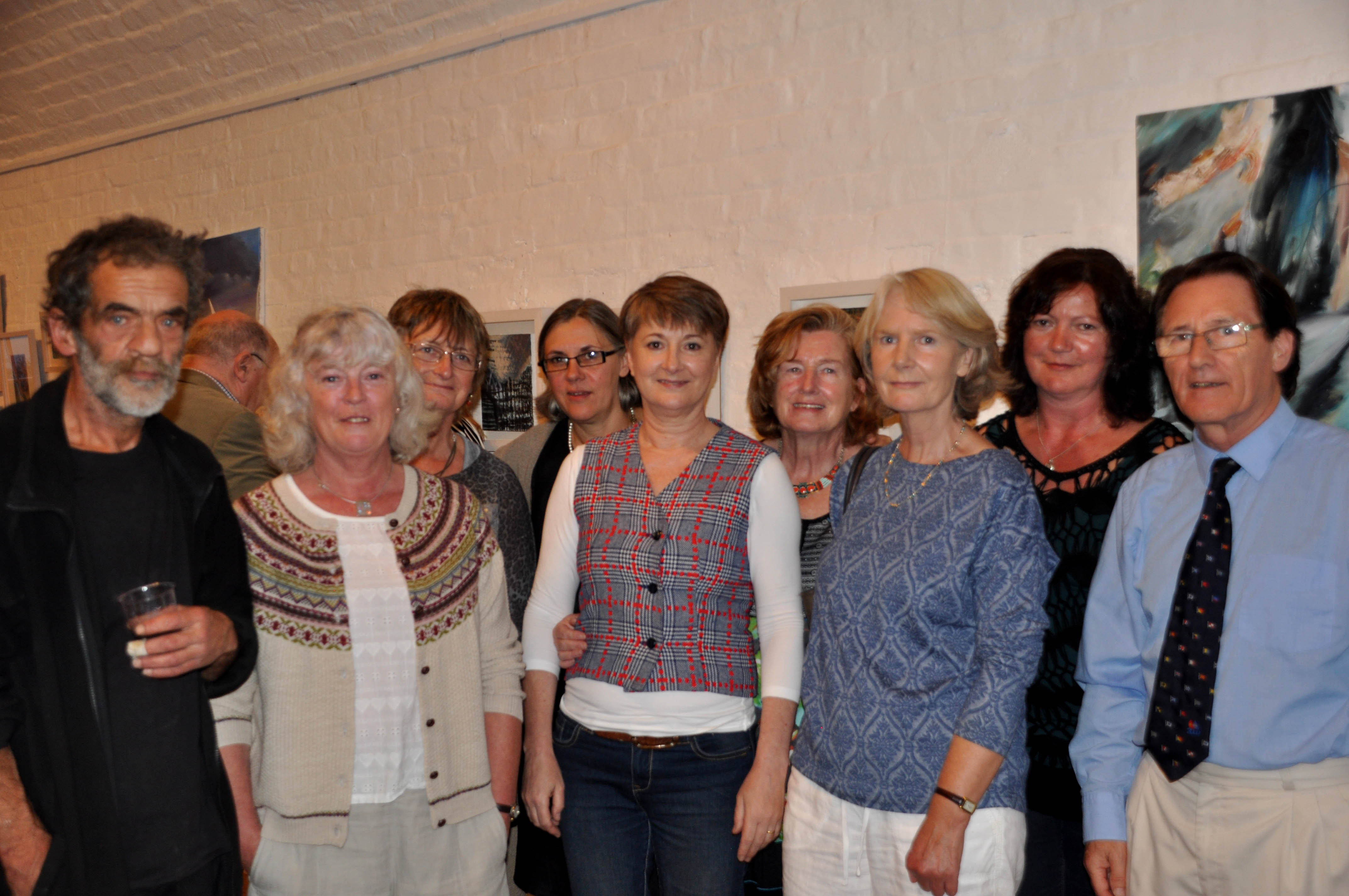
An exhibition of paintings and sculptures by 12 artists are on display at the wonderfully restored Camden Fort Meagher, Crosshaven, Co. Cork until the end of September.
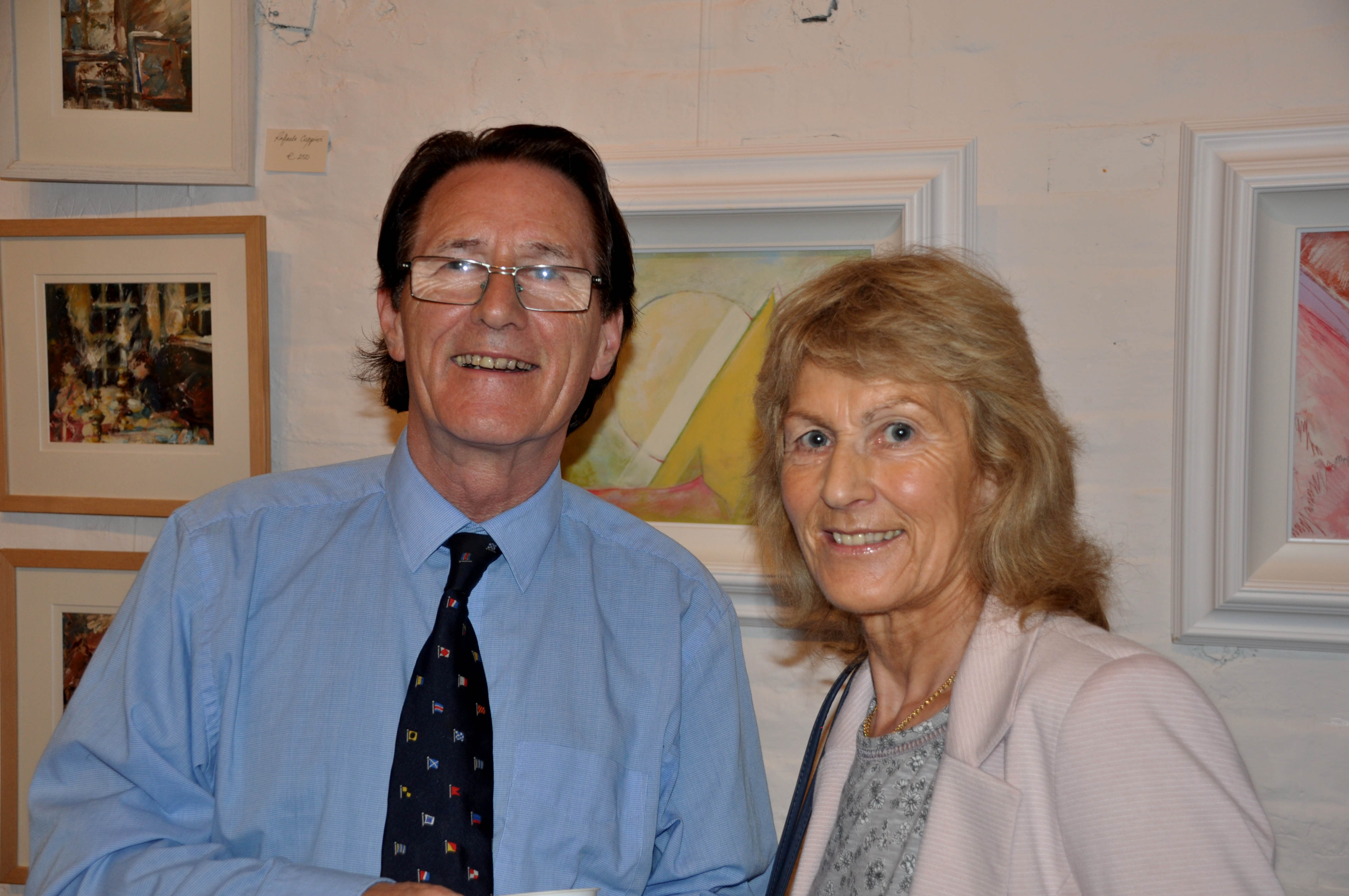
Dr. Sean Dunphy (AKA Dr. J.B. Dunphy) was invited to give the opening address to a large international gathering, including participants from USA, Finland, Estonia, UK, France, etc.
Dr. Dunphy complimented the volunteers for the great restoration of this unique Fort overlooking Cork harbour – and the artists who presented their work for this exhibition, so beautifully arranged by artistic director Dorothee Roberts.
“As some of you may know I work as a general medical practitioner at the Cork Road Medical Clinic in Carrigaline. I share my clinic with a homeopath, a French cranial osteopath, a psychologist and an art therapist. We share lots of useful information and videos on our blog which is free to use www.dunphymedicalcarrigaline.com.
As I’m not an art expert, I decided to take a humorous look at what others have said about art and artists. People often complain that art, music and fashion has gone too far. So the question I pose is ‘How Far is Too Far?’
So I started my research with my favourite poet/songwriter and sometime artist Leonard Cohen – who the Cork wits nicknamed ‘Leonard Moan’ and sure enough he came up trumps.
“I came so far for beauty,
I left so much behind,
My patience and my family,
My masterpiece unsigned.”
From there I checked out an old reliable Oscar Wilde – the quotation I chose was influenced by the fact that my nephew Miles Dunphy is one of Ireland’s foremost upcoming fashion designers currently based in London (www.milesdunphy.com) “One should either be a work of art or wear a work of art.”
Fellow Corkonian Graham Norton once commented on Michaelangelo’s David “now there’s a guy who works out.” I’m not sure if he’d agree with Rita Mae Brown’s opinion “that if Michaelangelo had been a heterosexual , the Sistine Chapel would have been painted basic white and with a roller.”
Renoir once commented that “I would never have taken up painting if women did not have breasts.”
And Salvador Dali famously said that I do not paint a portrait to look like the subject, rather does the person grow to look like his portrait.”
Patrick Kavanagh who wrote my favourite song made famous by Luke Kelly Raglin Road “there is something wrong with a work of art if it can be understood by a policeman.”
Tom Hobbs suggested that “Van Gough would have sold more than one painting if he had put tigers in them.”
John Ciardi said that “modern art is what happens when painters stop looking at girls and persuade themselves they have a better idea.”
Raymond Mortimore
“Many painters have made beautiful works out of repulsive objects – Picasso enjoys making repulsive works of art out of beautiful objects.”
I like Nancy Banks Smith’s observation on modern architecture “in my experience, if you have to keep the toilet door shut by extending your left leg, it’s modern architecture.”
Frank Lloyd Wright whose house I stopped in outside Chicago, “a doctor can bury his mistakes, an architect can only advise his clients to plant vines.”
I find that one learns something new everyday. A few weeks ago my daughter Liz wrote a full page feature on Crosshaven – in which she noted that Crosshaven had been mentioned twice in James Joyce’s Ulysses. That was news to me, I thought that, like most people I knew all there was to know about Ulysses, even though like most people I had never read it! Except for Molly’s soliloquy at the end of the book which David Norris explains brilliantly.
Although I did know that two of Joyce’s nieces were borders at Crosshaven Convent School at the time.
Which returns me to my theme, ‘how far is too far?’
In Joyce’s earlier work ‘Portrait of an artist’ Stephen Dedalus who academics describe as Joyce’s alter ego tells his buddy that he has decided, in spite of being raised Catholic and schooled by Jesuits, he has decided to turn his back on God and become an atheist. His buddy suggests why not join the Church of Ireland instead?? To which Stephen replies “I’d never go that far!”
———————————-─
The exhibition features work by well-known local artists Raffael Cappieri, Liz Charleson, Mandy Dale, Fiona Devlin, Liz Kavanagh, Maeve McManamon, Charlie Mountjoy, Lousie O’Shea, Constance Roberts, Dorothee Roberts, Carmel Smyth and Mick Wilkins.
Social psychologist Amy Cuddy shows how “power posing” — standing in a posture of confidence, even when we don’t feel confident — can affect testosterone and cortisol levels in the brain, and might even have an impact on our chances for success.
Sometimes the little things can make a big difference to our health and to our lives.
Hello everyone, here’s yet more justification for eating most Irish people’s favourite food, the fabulous potato. Below is a video by Dr. John McDougall about the health benefits of starch-based diets, we hope you find it interesting.
And if you’re looking for inspiring ways to cook our noble spud, check out Elgy Gilespie’s cookbook ‘You Say Potato!’


 Prof Raisman
 Dr Tabakow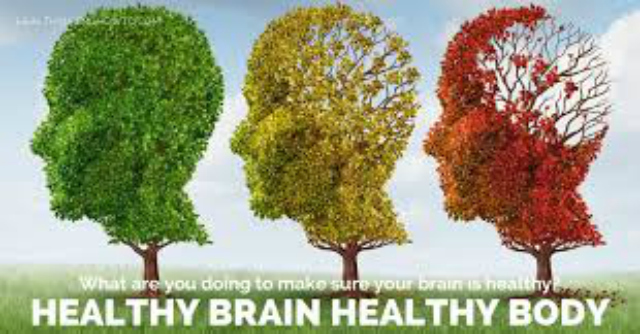










 Dunphy Medical Carrigaline